
A residential entrance needs to do more than provide access to a home. It should remain firmly secured when closed while being convenient to operate throughout the day. uPVC doors can meet the practical requirements of modern homes, but their security depends on more than the door material. The locking mechanism also determines how effectively the door stays secured within its opening.
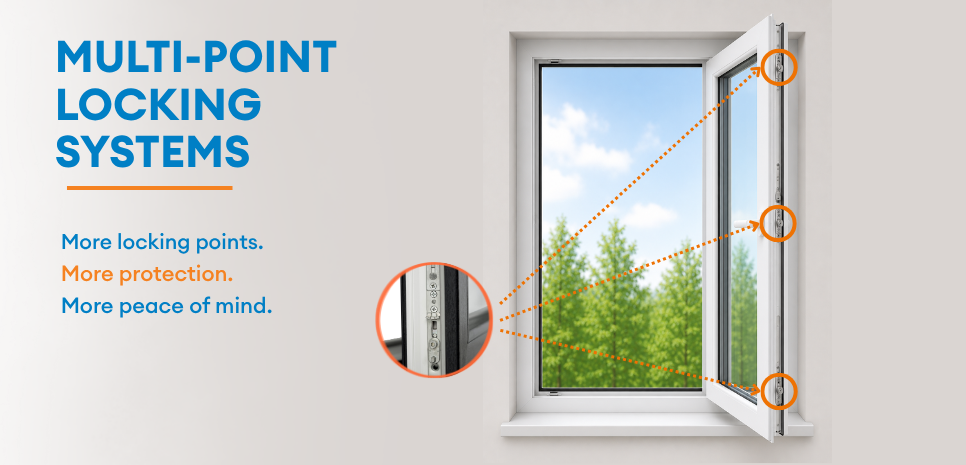
A single lock secures a door at one location. A multi-point locking system, on the other hand, uses several locking points to secure different areas of the door. This creates a more distributed locking arrangement and can provide greater stability when the door is closed. For homeowners, understanding this difference can make it easier to evaluate the security features of a residential door.
Common Security Concerns With Residential Doors and the Need for Stronger Locking Solutions
Residential entrances can face several security concerns when their locking arrangement depends on a single point. A homeowner may worry about forced entry, pressure being concentrated around one secured area, or the door not being held firmly across its height. These concerns make the locking mechanism an important consideration when selecting a door for a home.
A stronger locking solution can address these concerns by securing different areas of the door. Homeowners can look for a mechanism that:
- Secures the door at multiple locations.
- Holds the door firmly across different areas.
- Reduces dependence on a single locking point.
- Provides a consistent locking action when the door is closed.
Koemmerling’s uPVC casement doors for entrances and sliding doors for balconies use multipoint locking, with the door locking at several points for security and better sealing. This makes the locking arrangement a functional part of the door rather than simply an additional security feature.
How Multi-Point Locking Secures a Door at Multiple Points
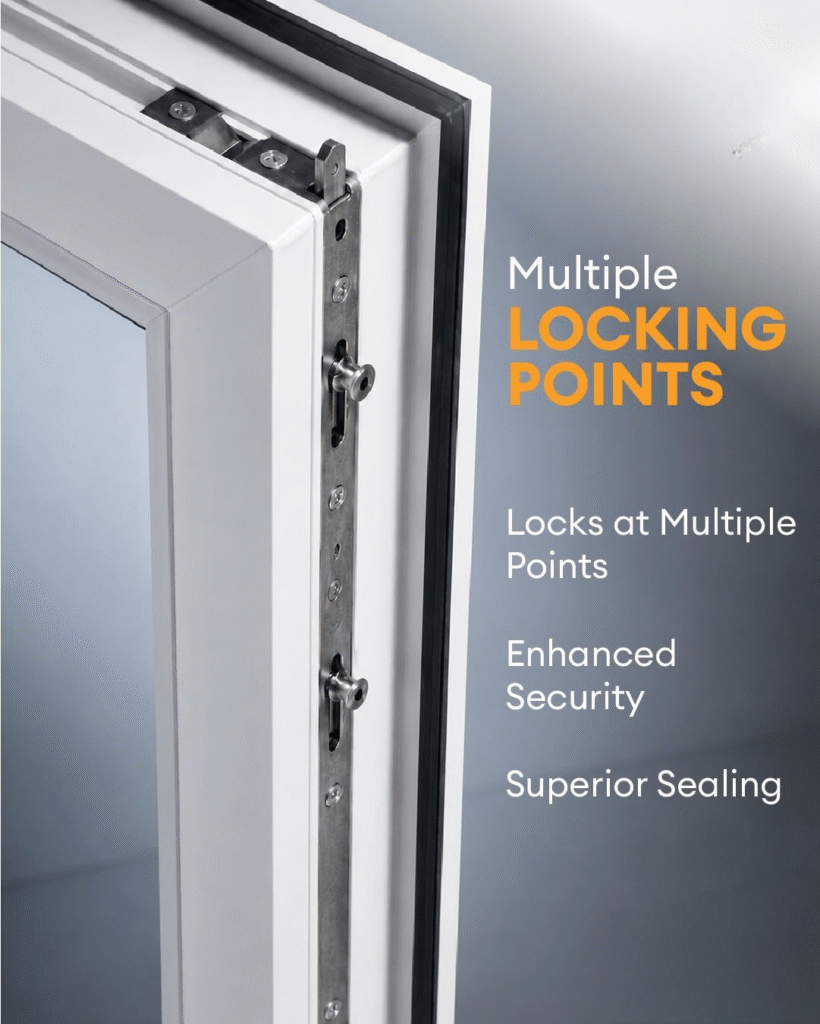
A multi point locking system consists of several locking points positioned at different locations along the door. When the door is locked, these points engage as part of the same mechanism rather than requiring the homeowner to operate each point separately.
So, there are more areas where the locking process takes place. The door no longer has to rely on one point alone to keep it secure but has to use multiple points. Thus, there will be an improved locking system that is easier to use.
How Multiple Locking Points Improve Door Stability and Resistance to Forced Entry
How the door is locked plays an integral role in keeping the door securely in its frame. If there are various locking points on the door, then the locking mechanism will be distributed throughout the door. This can be helpful for keeping the door securely closed rather than focusing on a specific area.
Multiple locking points can also contribute to resistance against attempts to force the door away from its secured position. However, the locking mechanism needs to work properly with the complete door. Correct alignment, appropriate hardware and proper installation all matter because the locking points need to engage as intended.
Koemmerling’s uPVC doors combine multipoint locking with other security-focused elements, including solid hinges and toughened or laminated safety glass. Together, these features form part of the overall security arrangement of the door rather than placing the entire responsibility on the lock.
Everyday Benefits of Multi-Point Locking for Homeowners
Security features must also be user-friendly to be utilized regularly. Since there are several locking points operated through one mechanism, homeowners can lock various parts of the door simultaneously using one locking procedure. This makes it easy to integrate locking procedures into their daily activities.
In addition, homeowners can pay attention to the performance of the door and the lock mechanism when used normally:
- The door closes fully into position.
- The handle operates without unusual resistance.
- The locking action feels consistent.
- The door remains firmly secured after locking.
These simple checks can help identify changes in operation before they become more difficult to address. When the mechanism works consistently, homeowners can feel more confident that the entrance is properly secured whenever the door is closed.
Koemmerling’s uPVC Doors: Security for Modern Entrances
Koemmerling offers uPVC doors for residential applications, including casement, sliding, slide-and-fold, lift-and-slide and tilt-and-turn options. All the uPVC doors from Koemmerling have a multi-point lock system, while its entire lineup offers various locking systems suitable for contemporary entranceways in homes.
For homeowners considering uPVC door security, multi-point locking is an important part of the overall door solution. It offers several locking points and acts in coordination with other door features, thus ensuring that the entrance created is both secure and functional.
Also Read: Top 5 Reasons To Choose uPVC Doors Over Other Types Of Doors
Conclusion
Residential door security depends on how effectively an entrance remains secured when closed and locked. A multi point locking system addresses concerns associated with relying on a single locking point by securing the door at several locations. This can support greater stability and resistance to forced entry while keeping the locking process practical for everyday use.
For homeowners, being able to secure multiple points through one coordinated action can also provide greater confidence whenever the entrance is closed. Koemmerling’s uPVC door solutions incorporate multipoint locking and other security-focused features for modern residential applications.
FAQs
1. What type of lock is best for uPVC doors?
A multi-point lock can be a suitable choice for a residential door because it secures the door at several locations rather than relying on one point. The appropriate locking arrangement will depend on the door design and the security requirements of the entrance.
2. How does multi-point locking improve uPVC door security?
It secures the door at multiple locations along its height. This can help distribute the securing action across the door and keep it more firmly positioned within its opening when closed and locked.
3. How can I tell if my uPVC door is properly locked?
The door should close fully, the handle and locking mechanism should operate consistently, and the door should remain firmly positioned after the locking action is completed.
4. Can a misaligned uPVC door affect its security?
Yes. Misalignment can prevent one or more locking points from engaging correctly. It can also make the door harder to close or lock, which can affect the reliability of the locking mechanism.
5. What are the different uPVC door lock types?
Residential uPVC doors can use single-point or multi-point locking arrangements. A single-point mechanism secures the door at one location, while a multi-point mechanism engages at several locations.