
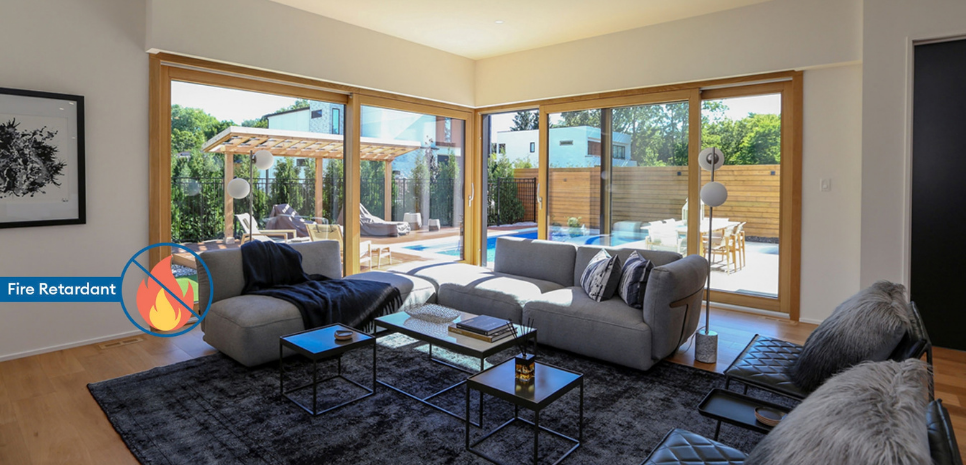
Fire safety is not determined by a single feature of a building. It also depends on how the materials used throughout the structure behave when exposed to fire. Windows and doors deserve particular attention because their profiles and other components can influence how an opening responds during a fire. This makes the material’s behaviour under flame an important consideration when choosing uPVC door and window systems for a residential or commercial building.
uPVC is often discussed in terms of insulation, durability and weather performance, but its behaviour under a situation of fire is a separate concern for material consideration. Understanding what makes uPVC fire-retardant, how this differs from simply tolerating high temperatures, and what the property means for the performance of windows and doors provides a clearer basis for evaluating fire resistant uPVC windows and doors.
What Makes uPVC Windows and Doors Fire-Retardant and How Does It Work?
Fire retardancy refers to a material’s ability to resist ignition and limit its contribution to the continuation or spread of fire. It is different from saying that a material cannot be affected by heat. The behaviour depends on the material’s composition and how it reacts when exposed to a flame.
Koemmerling’s uPVC profiles are made using a compound with naturally flame-retardant properties. The profiles do not support combustion and are self-extinguishing when the external flame source is removed.
In practical terms, the fire-retardant behaviour of uPVC relates to:
- Resistance to sustaining combustion: The profile does not readily continue burning on its own.
- Self-extinguishing behaviour: Once the external flame source is removed, the material can extinguish itself.
- Reduced contribution to fire spread: The profile is less likely to promote the development of an accidental fire.
These characteristics explain why fire behaviour is relevant when assessing uPVC doors and windows for building applications.
The Role of Fire-Retardant Properties in the Overall Performance of uPVC Windows and Doors
Fire retardancy is part of the overall performance of uPVC doors and windows. A non-combustible profile which can self-extinguish after the external flame source is removed can reduce its contribution to the development and spread of an accidental fire.
But the profile is only a part of a complete window or door. The behavior of the completed installation in a fire can be affected by other factors such as the glazing, hardware, seals, construction, and installation.
This means that fire-retardant performance should be considered alongside the other technical requirements of the building rather than treated as an isolated measure of fire safety. For applications requiring a specific fire rating, the performance of the complete tested assembly remains the relevant consideration.
Where Fire-Retardant uPVC Becomes Particularly Relevant
The fire behaviour of window and door materials can be relevant wherever these components form part of a building’s overall fire-safety considerations. This includes residential buildings as well as other structures where the selection of materials needs to account for their behaviour during an accidental fire.
For homeowners considering uPVC windows, it is especially important to distinguish the fire-retardant behaviour of the uPVC profile from the fire rating of the complete window. The same principle applies to doors: selecting fire resistant doors requires consideration of the complete door construction and its tested performance, rather than relying only on the material used for the profile.
Also Read: Are uPVC Windows and Doors UV Resistant
Koemmerling: Offering High-Quality uPVC Windows and Doors for Fire-Retardant Performance
Koemmerling’s uPVC windows and doors incorporate profiles made from a special compound developed with fire behaviour in mind. The profiles are naturally flame retardant throughout their product life, do not support combustion and are self-extinguishing when the external flame source is removed. The profile compound fulfils Class 1 under BS 476: Part 7 for surface spread of flame.
This fire-retardant characteristic adds another dimension to Koemmerling’s uPVC doors and windows, particularly where material selection needs to account for preventive fire protection. The property can be considered alongside the system’s other performance requirements when selecting windows and doors for residential and other building applications.
Conclusion
The fire behaviour of a window or door material cannot be understood simply by asking whether it can withstand high temperatures. Fire retardancy concerns how the material responds to flame, whether it supports combustion and how readily it contributes to fire spread.
For uPVC doors and windows, understanding this distinction helps homeowners and building professionals evaluate fire performance more accurately. Koemmerling’s uPVC profiles add fire-retardant properties to the material’s overall performance, making this an important consideration when selecting window and door systems for different building applications.
Frequently Asked Questions (FAQs)
1. How does uPVC respond to fire and heat?
uPVC does not support combustion in the same way as readily combustible materials and Koemmerling’s profiles are self-extinguishing when the external flame source is removed.
2. Are uPVC windows and doors fire resistant?
uPVC profiles can be fire retardant, but the fire rating of a complete window or door depends on the complete assembly and applicable testing.
3. Is uPVC heat resistant?
Heat resistance and fire retardancy are different properties. Tolerance to high temperatures does not by itself determine fire behaviour.
4. What is the heat capacity of uPVC?
Heat capacity refers to the amount of heat needed to raise a material’s temperature. It is different from the material’s fire-retardant properties.
5. Can the glass break before the uPVC profile is affected by fire?
Yes. Glass and uPVC respond differently to heat, so glazing may be affected before the profile. Overall performance depends on the complete window system.