
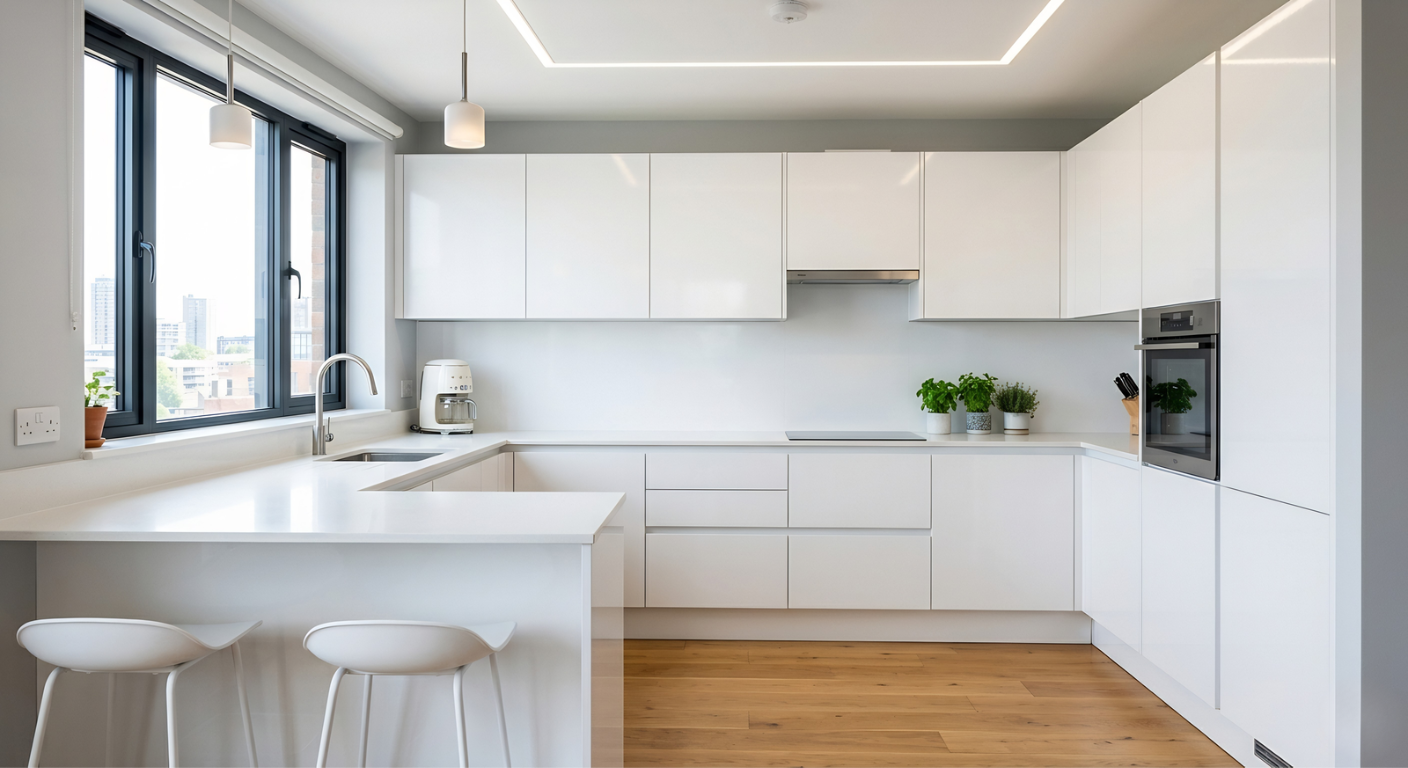
The modular kitchens that are found nowadays are made in a way to make them efficient, practical, and durable since they face constant exposure to water, steam, and heat on a day-to-day basis. This is the reason why the choice of material becomes very vital in kitchen design. Various materials are available in the market, but the most preferred these days is the PVC sheet.
While exploring different kitchen options, people now focus on more than just the overall appearance. Durability, ease of maintenance, and performance in environments with moisture and heavy use are other factors that are more important when comparing modular kitchen materials. Moreover, in many situations, individuals pay attention to the practicality of the selected materials rather than their appearance.
Moisture Resistance That Supports Kitchen Conditions
Resilience to moisture is one of the key requirements in a kitchen. There is often an abundance of water present near sinks, dishwashing sections, and cleaning sections, and there are some materials that react poorly in these environments. PVC sheets are highly valued in these spaces for their resistance to water absorption and for maintaining structure even with regular water contact.
Whereas other materials can swell or degrade over time, panels made out of PVC are always going to be stable and maintain their shape. Therefore, they will be a good choice when looking for materials to use in your kitchen, considering their functionality instead of their aesthetics alone. Most people will also factor this in while choosing the best material for modular kitchen setups in humid environments.
- Does not absorb water easily
- Maintains structural stability in wet areas
- Reduces the chances of swelling or deformation
Consistent Finish for Modular Kitchen Design
A modular kitchen largely relies upon correct alignment, uniformity, and neatness among various parts, including the cabinets, shutters, and other storage places. The use of PVC sheets is recommended in modular kitchens due to their uniform thickness and smooth surface finish.
Such consistency is extremely crucial in contemporary kitchen design because alignment forms an integral part of the aesthetics in kitchens. When used properly, PVC sheets for modular kitchen applications help maintain clean lines and reduce irregularities during installation.
Koemmerling’s KömaBoard is favored in numerous projects due to its ease of use and the fact that they provide more precision and control during the finishing process than irregular natural materials.
Read More : PVC Sheets for Modular Kitchen Designs – Stylish & Durable
Easy Fabrication and Installation
Another factor that contributes to the popularity of PVC sheets in modular kitchens is their ease of fabrication. Carpenters can easily cut, shape, and install them, thus reducing effort on site and completing projects faster. This makes them a suitable option in interior projects where speed is a priority.
PVC sheets are also able to offer flexibility in making changes in design without using complicated processes or tools, hence, making the process more accurate, particularly when working with modular layouts that require precise measurements and fittings.
- Easy cutting and shaping
- Faster installation process
- Suitable for customized kitchen layouts
Low Maintenance in Daily Kitchen Use
Materials used for kitchen areas should be able to withstand repeated cleaning without affecting their condition. PVC sheets have very low maintenance needs since they do not need to be polished, painted, or treated in any special way. Wiping will typically suffice for cleaning purposes.
They are therefore appropriate for those homes that need functional solutions rather than maintenance-intensive options. Over time, it saves efforts as well as keeps the appearance uniform without incurring any further cost of maintenance.
For families evaluating modular kitchen materials, this low-maintenance feature is often one of the most practical advantages.
Structural Stability for Cabinet Applications
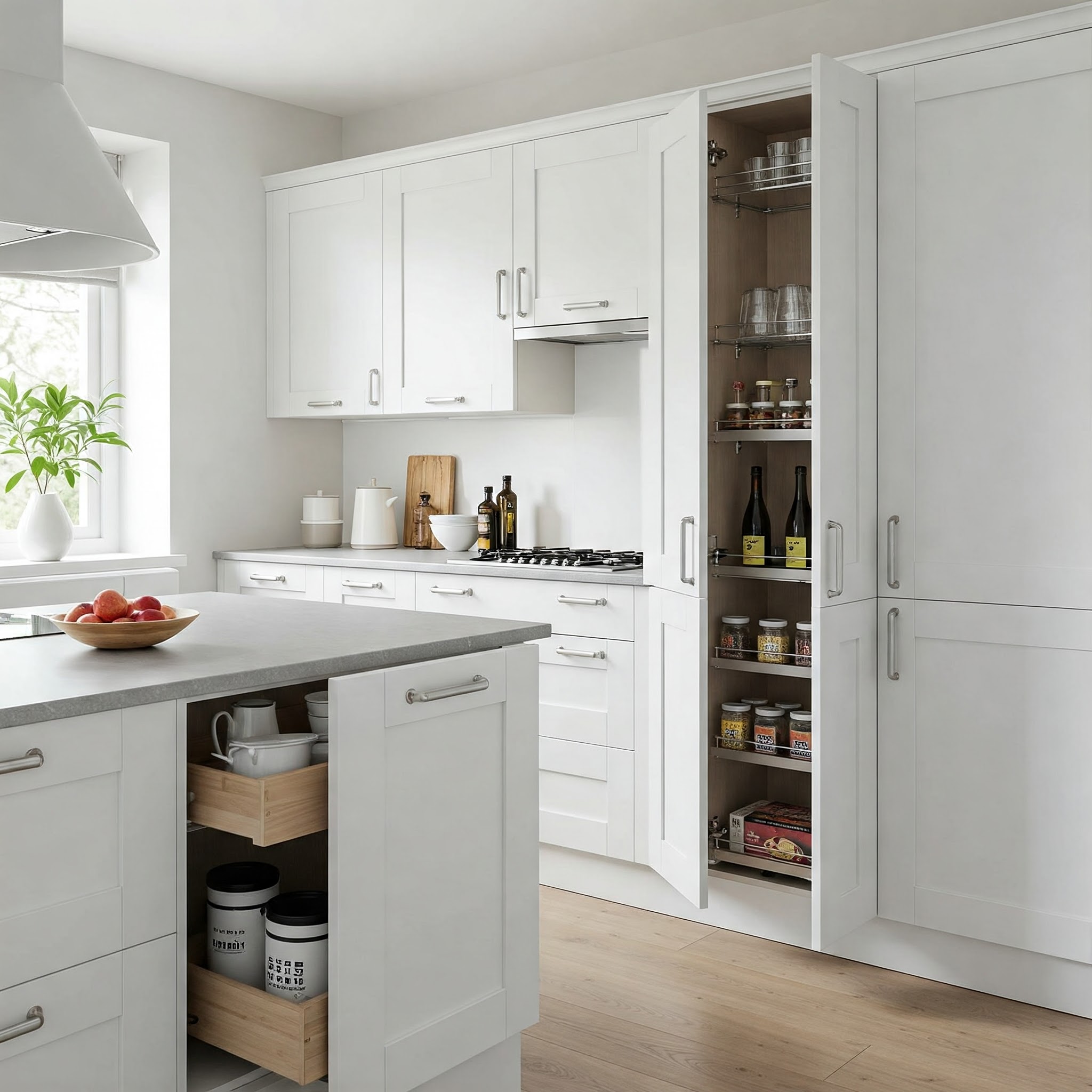
Modular kitchen designs incorporate various structural components, including base cabinets, wall cabinets, and storage compartments. PVC sheets are used for modular kitchen construction since they offer panel stabilization without increasing the load on the structure.
Their uniform density makes them ideal for ensuring balance within cabinet frames, particularly under prolonged periods of use. They are not designed for high load-bearing situations but prove to be excellent for use in kitchen cabinetry.
This makes them a practical alternative when selecting kitchen materials that prioritize everyday usability, especially when deciding on the best material for modular kitchen solutions in modern homes.
Resistance to Termites and Environmental Damage
Kitchen furniture that is crafted using natural materials, such as wood, is susceptible to problems like termites and internal damage. The use of PVC sheets eliminates such problems because these sheets cannot be affected by termites.
This makes them suitable for long-term kitchen installations where durability is important. For settings where humidity and fluctuating temperatures are common, PVC-based materials preserve their condition without internal deterioration.
- Termite-resistant material
- Suitable for humid environments
- Long-lasting structural performance
Flexible Design Applications in Kitchens
PVC sheets are not restricted to only one use in the kitchen environment. There are various places where they can be employed, like cabinet shutters, partitions within the kitchen, back panels, and storage areas as well.
Their flexibility also helps ensure that simple, modern kitchen designs can be achieved without making construction difficult. This is one of the reasons why they are always considered when discussing sheets for a modular kitchen.
Read More : Benefits of Using WPC Board for Kitchen Cabinets
How Koemmerling Supports Modular Kitchen Applications
Koemmerling offers KömaBoard, a range of PVC sheets intended for use in indoor settings where consistency is critical. The product is noted for its even thickness, excellent surface quality, and simplicity of manufacturing, which makes it appropriate for modular kitchens where accuracy is essential.
Since KömaBoard is non-porous, it maintains its surface stability in environments that are frequently cleaned and exposed to moisture. It also allows easy cutting and shaping, hence making it easy for carpenters to achieve accurate modular kitchen layouts with better control over execution.
Conclusion
The selection of suitable material is a key element in influencing the performance of a modular kitchen. PVC sheets have an advantage in terms of moisture resistance and easy installation, thus making them a strong option when evaluating kitchen materials for modern homes.
Their ability to support structured cabinetry, maintain consistent aesthetics, and cut down on maintenance work makes them a dependable option in day-to-day kitchen settings. For individuals searching for the best material for modular kitchen, KömaBoard serves as an appropriate option that balances functionality and usability.